

Art/Lab mounts exhibitions throughout Portland, OR. We partner with Jewish creatives, primarily but not solely from the Pacific Northwest, across all genres; holding group and solo exhibitions throughout the year. Art/lab’s mission is to establish a presence for Jewish artists and Jewish content within the contemporary arts ecology of Portland, Oregon and beyond. With the continued marginalization of Jewish voices across the global arts ecology, the exhibitions and associated programs we hold are more important than ever.
Exhibitions
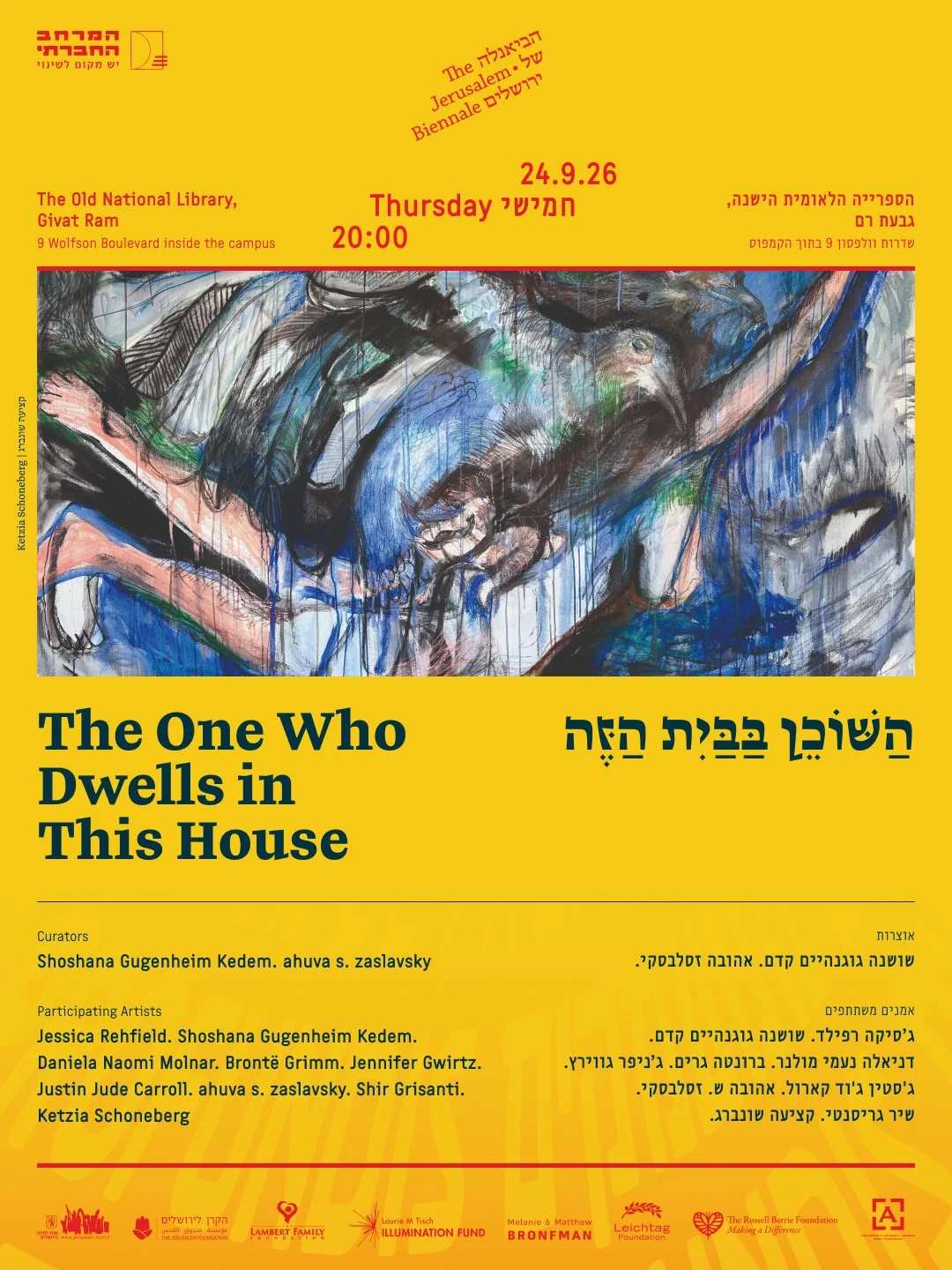
The one who dwells in this house / השוכן בבית הזה
Curators:
Shoshana Gugenheim Kedem
ahuva s. zaslavsky
Works on grief and praise by: Justin Jude Carroll, Brontë Grimm, Shir Grisanti, Jennifer Gwirtz, Shoshana Gugenheim Kedem, Daniela Naomi Molnar, Jessica Rehfield, Ketzia Schoneberg, ahuva s. zaslavsky
At the Jerusalem Biennale,
Jerusalem, Israel
September 24th - November 12th, 2026
-
Artist Statement:
We are all mourners. As part of the Art/Lab curatorial vision, The One Who Dwells in This House, my artworks reflect on Mishnah Middot 2.2 and its description of how pilgrims were to enter the Temple Mount. In my spiritual worldview, each of us has cause to enter to the left, as we are all healing from some wound or tragedy. As an American Jew with many family and friends in Israel, I mourn the unspeakable October 7 attacks on the citizens of Israel, and the subsequent anti-semitism experienced throughout the world, including in our home community. I also mourn the government of Israel’s tragic response in its cataclysmic attacks on Gaza and elsewhere.
My artworks use the image of a wave, which by its nature “goes around” as mourners do in the scriptural passage. In these paintings, the wave depicted in paint obscures shards of found paper containing various fragments of Hebrew text, including sheet music for HaTikvah, which I use in my role as a songleader in our Jewish community. One interpretation of these artworks is that in recent years our hope — the substance of our desire for wholeness as a people — has been swamped by waves of reactionary politics, righteousness that tramples the rights of others, and grief channeled into violence. The shreds of a peaceful world once dreamed of are barely discernible beneath the flood. We are all mourners now, Jew and non-Jew alike. I pray that this state of affairs is temporary and that once again hope will rise above the flood.Artist Bio:
Justin Jude Carroll is a visual artist whose practice explores what occurs when spirit encounters material. He is interested in art as play, as experiment, in allowing materials to assemble themselves into novel constructions. Educated at Carnegie Mellon University and Brown University, Justin will debut his first solo exhibition at Gateway Regional Arts Center in Lexington, KY, USA in October 2026, and his artwork is represented in private collections including Google, Bank of America and Vanguard. He is represented by ArtLifting, part of their program supporting artists with disabilities. Justin lives in Portland, OR, USA with his family; learn more at www.justinjudecarroll.com -
Artist Statement:
In the multimedia narrative series Devour, prop fabrication, costuming, and Jewish mythic archetype intersect to critique the systemic commodification of disability. Drawing upon the predatory succubi, Eisheth and Naamah, within Jewish lore, the work interrogates how contemporary media appropriates marginalized lived experiences under the guise of artistic empathy.In Mishnah Middot 2:2, those in mourning or excommunication walk counter-directional to the left, forcing a public encounter rooted in witnessing and collective care. Devour confronts a profound distortion of this sacred visibility: a cultural paradigm where disability is not genuinely met, but cannibalized for prestige. The succubic figure masquerades in the signs of impairment, veiling herself in stolen narratives while erasing the authentic subject. Crimson pigments at their fingertips mark the physical violence of this extractive spectacle.
The visual palette relies on a stark juxtaposition: a tranquil, eerie blue wash symbolizing institutional indifference against bold crimson representing bodily truth and survival.
Positioned within The One Who Dwells in This House, Devour interrogates the threshold between public exploitation and sacred sanctuary. It compels viewers to confront their own positionality in the public square, urging a shift away from the passive consumption of simulated pain toward a visceral, accountable act of witnessing.
Artist Bio:
Brontë Grimm is an award-winning and internationally exhibited multidisciplinary artist, filmmaker, storyteller, and disability activist whose artwork focuses on initiating a dialogue about issues facing the disabled via a Jewish and queer lens. They were the recent subject of the short documentary “Kathryne: Uncensored” where they discussed accessibility in the arts. Brontë’s current activism and art focus is discussing the intersection of Domestic Violence, Disability, and Queerness, and using anachronistic silent filmmaking to construct narratives about Jewish identity and disability. Brontë lectures widely on disability arts, ableism in media narratives, and disability representation in film and TV. -
Artist Statement:
My practice engages questions of land, belonging, and responsibility; how we live with the places that hold us, and how those places carry our histories. In recent work, I braid plants harvested from lands I tend in the settler-colonial United States, working in quiet collaboration with a pear tree rooted in my yard. These gestures arise from reckoning with my role as both caretaker and inheritor.Returning to my birthplace and the homeland of my ancestors, I carry this practice as both method and ritual. Israel is a deep taproot of my life, beloved and formative, yet marked by profound grief and ethical rupture. As an Israeli Jew living in diaspora, I move through this terrain holding longing, complicity, and prayer.
This work inhabits the space between reconnaissance and reckoning: learning a place while acknowledging the cost of belonging. Like the mourner who walks against the prescribed flow, I enter carrying loss, seeking a form of witnessing that does not resolve grief, but remains present with it.
Artist Bio:
Shir Grisanti is a cross-disciplinary artist whose work ranges from studio work to reimagining institutional possibilities. Shir is a Latine/Israeli immigrant mother whose multifaceted work is deeply rooted in self-actualization, community & peace work, and environmental restoration.In 2012 Shir founded c3:initiative (now known as Stelo) in Portland, Oregon, a nonprofit private operating foundation designed to support the production of art and foster community engagement between artists, cultural institutions, and the public. The organization’s first branch, Stelo, is an artist residency program, with future initiatives focusing on wellness and environmental justice in development.
Shir co-leads the rewilding, restoration, and operations of Camp Colton, an 85-acre forest retreat in rural Oregon, alongside their husband Laurence. Their efforts center on land stewardship, ecological repair, and creating spaces for community connection.
-
Artist Statement:
This intergenerational dance work centers elder women’s bodies as carriers of memory, care, and communal wisdom. The piece explores how communities recognize and respond to vulnerability—through ritual, humor, and embodied encounter.The primary choreographic action is walking, or “perambulation,” encompassing many ways bodies move through space, based on texts from the Mishnah and the teachings of Rabbi Sharon Brous. Performers travel along intersecting paths, allowing absurdity, tenderness, misstep, and play to interrupt the flow. Those who walk counter to the dominant direction are not okay—in mourning or in states of fracture. When paths cross, one asks and the other names their loss, and the encounter is met with blessing, humor, and sometimes unexpected results.
Through repetition, perambulation becomes an embodied ritual of witnessing and connection—sometimes tender, sometimes unruly—offering a vision of communal responsibility where presence itself becomes an act of repair.
Artist Bio:
Jennifer Gwirtz is a dance artist whose work lives at the intersection of movement, physical theater, and science, with Jewish texts and customs at its core and a lasting focus on bodies too often unseen — those of older women and of people who move differently. In 2022 she created Kol b'Isha / Voice Within Woman, a stage work on the voices of Jewish women and the silencing that emanates from the heart of Judaism, drawing on her life as the daughter of a vocal music teacher; more recently, The Lost Tapes drew on a lifetime of hearing her father at the piano, the music — and its mistakes — inherited and carried in her own body. She has made work for the stage, galleries, and site-specific settings since the mid-1990s, first in San Francisco and, since 2016, in Portland, Oregon. -
Artist Statement:
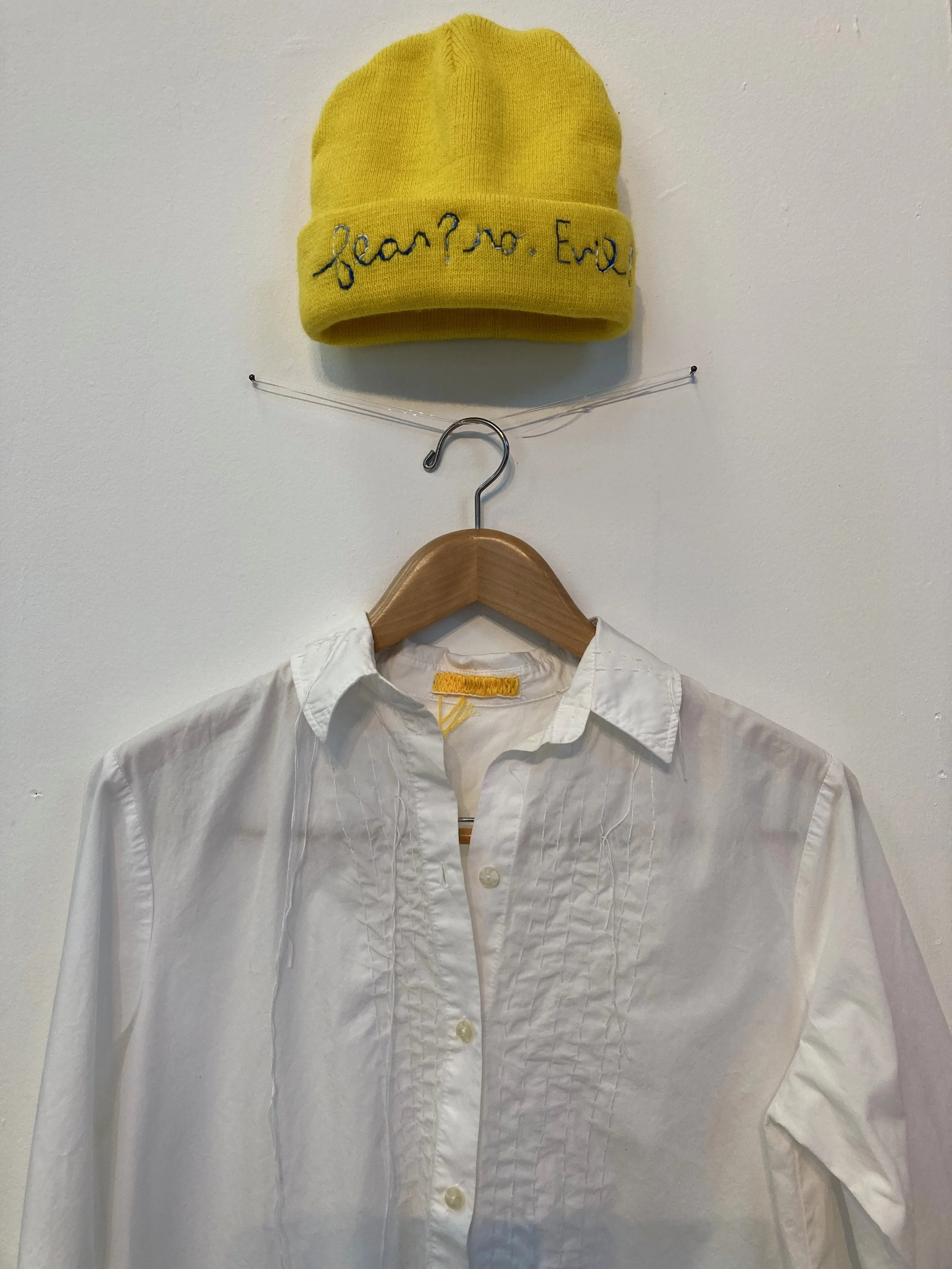
Jewish tradition offers us rich details for the material and ritual practices applied in death and burial. We are instructed on how to make the burial garments (tachrichim), how to prepare and dress the body of the deceased, and how to bury our dead. Even the words we recite as we perform these sacred acts are ancient and enduring. Traditional Jewish mourning practices have us rend our garments, distinguishing the mourner within the community; a material and visual demarcation of a state of being for the seven day period of shiva. But what of the one mourning the loss of a nation, the loss of a community, a friendship or the loss of belonging? What would their mourning garments look like? How, without the need for words, might one convey to others a suspended state of mourning as all attempts to return to what was, fail and grief hovers? Burial Garment studies offer an answer to these questions; juxtaposing familiar, personal items with ancient and contemporary symbols of loss and grief, creating a borderland, a space of the in between, where today’s mourner, restless and in need of comfort, can be recognized.
Artist Bio:
Shoshana Gugenheim Kedem | שושנה גוגנהיים קדם is an American/Israeli social practice artist, curator and arts administrator. Her work rests in the borderlands where tradition and change meet, allowing for new forms to emerge. Shoshana’s work often takes shape as large and small scale collaborations with public and private audiences in a wide array of contexts from prisons to houses of faith, museums and schools to rural fields and rivers. These socially engaged encounters are sculpted by brave and sometimes whimsical collaborations perhaps through a conversation, a blind-folded game, a silent canoe ride, an urban walk, a civics test, or a shared meal. Shoshana was one of the first women in modern times to train and practice as a Torah scribe. Her scribal work inspired her international Jewish women artists collaboration, Women of the Book, launched with the Jerusalem Biennale 2015. After 20 years in Israel, Shoshana now resides in Portland, Oregon where she is the Co-Founder and Director of Art/Lab: Innovating Jewish Arts and Culture, a not-for- profit serving contemporary Jewish artists and their audiences in the Pacific Northwest. -
Artist Statement:
Earth's restive heart / A river is born
Hells Canyon wildflowers, weeds, and rocks; Snake River water; egg; limestone; mule deer bone on paper
30 x 22", 2025Hells Canyon is North America's deepest river gorge, cut through rock that came from far away, millions of years ago. The canyon walls are made of exotic terranes — fragments of ancient seafloor and islands, born in a vanished ocean, that drifted for tens of millions of years before colliding with the continent's western edge. This stone crossed oceans to arrive in what is now a dry, inland desert. It came as cataclysm, raising mountains and carving furrows, and became, over time, the sun-baked rock through which the Snake River now flows.
This painting is made from that history. Wildflowers and weeds gathered along the canyon's rim carry pigment into paper bound with egg, an old alchemy that turns matter into image. Limestone and mule deer bone — both built from calcium that once gave structure to living bodies — are ground into color. Snake River water, drawn from deep within the sculpted terranes, allows it to move across the paper in rivers of its own.
This canyon is one of many places I return to for "Memory of a Larger Mind," an ongoing project gathering pigment and language from landscapes carrying violent histories (glaciers, former concentration camps, this gorge), asking what they remember. The terranes hold an ocean that no longer exists; that kind of memory, held in the body of water and stone, is what I mean by a larger mind.
The earth has a restive heart, always recreating, turning violence to flow. A river is born from a wound in the earth's surface, from movement so old it now reads as geology, not injury. How long does a place hold the memory of its creation? How is that holding also a kind of birth?
Artist Bio:
Daniela Naomi Molnar is a poet and artist who creates with color, water, language, and place. She makes pigments from plants, bones, stones, and specific waters, using them to make sculptures, paintings, installations, and poems. Her third book, Memory of a Larger Mind, is forthcoming from Omnidawn in October 2026. -
Artist Statement:
This scroll, a reference to our torah, hangs vertically, rather than flat, as when in an Ashkenazi shul. The scroll is a torah reduced to one word handpainted on either side:« אתה » and «אני ».
Directions to enter the Temple Mount from the left or right changed based on grief or need; entering against the flow of people was directed when grieving, like confronting community when one needs help. This is the same when we pray.
It is the same concept with every ritual and ritual object: seeking return by turning inward, turning left or turning right; either seeking H*shem while grieving or being godly by being functional for those while they are struggling.
Uncovering our direct connection to H*shem through studying torah is the act of balance that connects our poles together; in society, on our own journeys, and keeps us afloat—if we continue seeking it, and even when we do not.
The scroll is a pathway and vehicle to the internal world. A reader may circle it to see its entirety, from the left or right, engaging in echoes of ancient ritual even without total awareness. The verticality emulates connection between the divine and our mundane, grounded experience in which g*d lives. Simple words reduce our experience to the essence of being: to the dichotomy that exists between g*d and their creations, the space in meeting which relieves grief; the space between You and I, in which we are both sides of a single scroll.Artist Bio:
Jessica Rehfield (They/them) is an interdisciplinary artist and educator born in Juneau, Alaska on Lingít Aaní. They make work and create community programs to share about Jewish and Queer identities. They hold an MFA in Drawing & Painting from Oregon College of Art and Craft in Portland, Oregon. Jessica is an inaugural Fellow with the Art/Lab Jewish Artists’ Fellowship and previous resident at The Arts Center (Corvallis, OR), Eastside Jewish Commons (Portland, OR), and Salem Art Association (Salem, OR) where they created and produce the exhibits Queer Love, The Art of Drag, TWO SPIRIT: Indigenous Drag Perspectives on Climate Change and Jew &, all firsts for the exhibiting venues. They work with schools, universities and arts organizations to encourage dialogue across communities, and have been a student of Yiddish for five years. Find work at jessicarehfield.com & @alenereh
-
Artist Statement:
My mixed media paintings and drawings constitute a temporal self-portraiture, depicting animals and the female figure within a psychospiritual framework and an expanded notion of species sentience. These feminist works combine elements from my active dream life, longstanding meditation & visualization practices, cultural background and familial relationships to create a complex interplay of intimate scenes.River is one work from my painting series entitled The Bluebird of Happiness. It is a large format, mixed-media painting on canvas. Expanded notions of species sentience are intrinsic in the painting. The female figure interacts with the doves (Yona) representing a longed-for peace. Yona is the origin of the prophet's name Jonah, representing peace, love, and the Spirit of God within religious contexts. The female figure and the doves swim together and will emerge from the depths of the water together. They swim upward from the depths of challenge and emotion, represented by the water. Both the doves and the human survive through shared sentience, love and support.
Artist Bio:
Ketzia Schoneberg is an internationally exhibiting visual artist and visiting art professor at Lewis & Clark College. Her feminist autobiographical works offer a multi-species depiction of psychospiritual engagement and movement-based plays of power and intimacy. Schoneberg was born in Los Angeles and is currently living and working in the Pacific Northwest. -
Artist Statement:
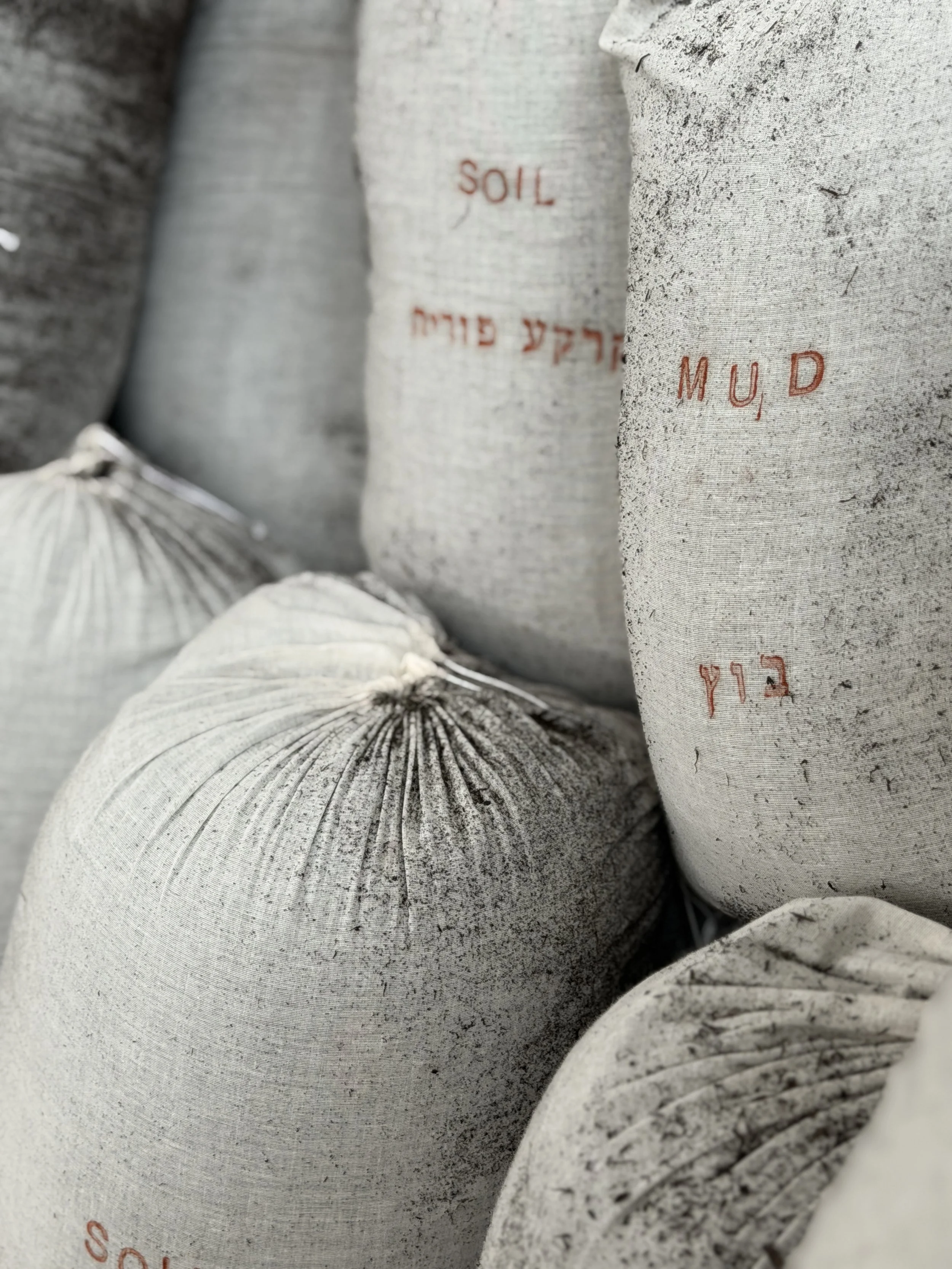
Digging into Earth’s flesh to displace soil is one of humanity’s oldest physical and spiritual dialogues. The pile of soil—raw matter containing crushed bones, decayed leaves, and cosmic dust—remembers all that has died, yet holds fertile capacity for new life. As a temporary monument, its volume mirrors the void left behind: creation and destruction move as one.This installation is a slow-motion ritual of dispersal. Visitors are invited to become active participants in its gradual extinction through tiny, intimate thefts—filling a muslin sack with soil to either add it to the growing structure or carry it away with them.
Our bond to soil is absolute—we are composed of the land. Scooping dirt into plain cloth mirrors sacred, universal burial rites across the Levant and the wider world. Death is not observed from a distance; loved ones touch the earth, shroud the deceased in simple linen, and return the soil by hand. Manually gathering, lifting, and bearing the earth’s weight transforms grief into an intentional physical labor—a shared work carried by the body. The unadorned sack honors that we are dust returning to dust.
This labor is in deep relationship to ancestral land, where soil is often both a site of tragic loss and the foundation of endurance. Bound within porous muslin, the living earth becomes a seedbed of hope and stubborn growth. Carrying a sack steps into an ancient choreography—the weight of loss borne alongside trust that tending to this sorrow prepares the ground for return, renewal, and collective repair.
Artist Bio:
ahuva s.zaslavsky is a Portland-based multidisciplinary artist working across painting,printmaking, sculpture, video, writing, and curation. Her practice investigates trauma,displacement, and cyclical power dynamics. Grounded in a personal reading of Jewish mythology of the Golem, zaslavsky explores the threshold between creator and material, as well as the circular nature of creation, collapse, and transformation. She holds a BA in Behavioral Sciences and an MFA in Visual Studies from the PacificNorthwest College of Art, where she received the MFA Thesis Award. She is the author of Between These Borders Wanders A Golem (First Matter Press).
ZACHOR
זכור
REMEMBER
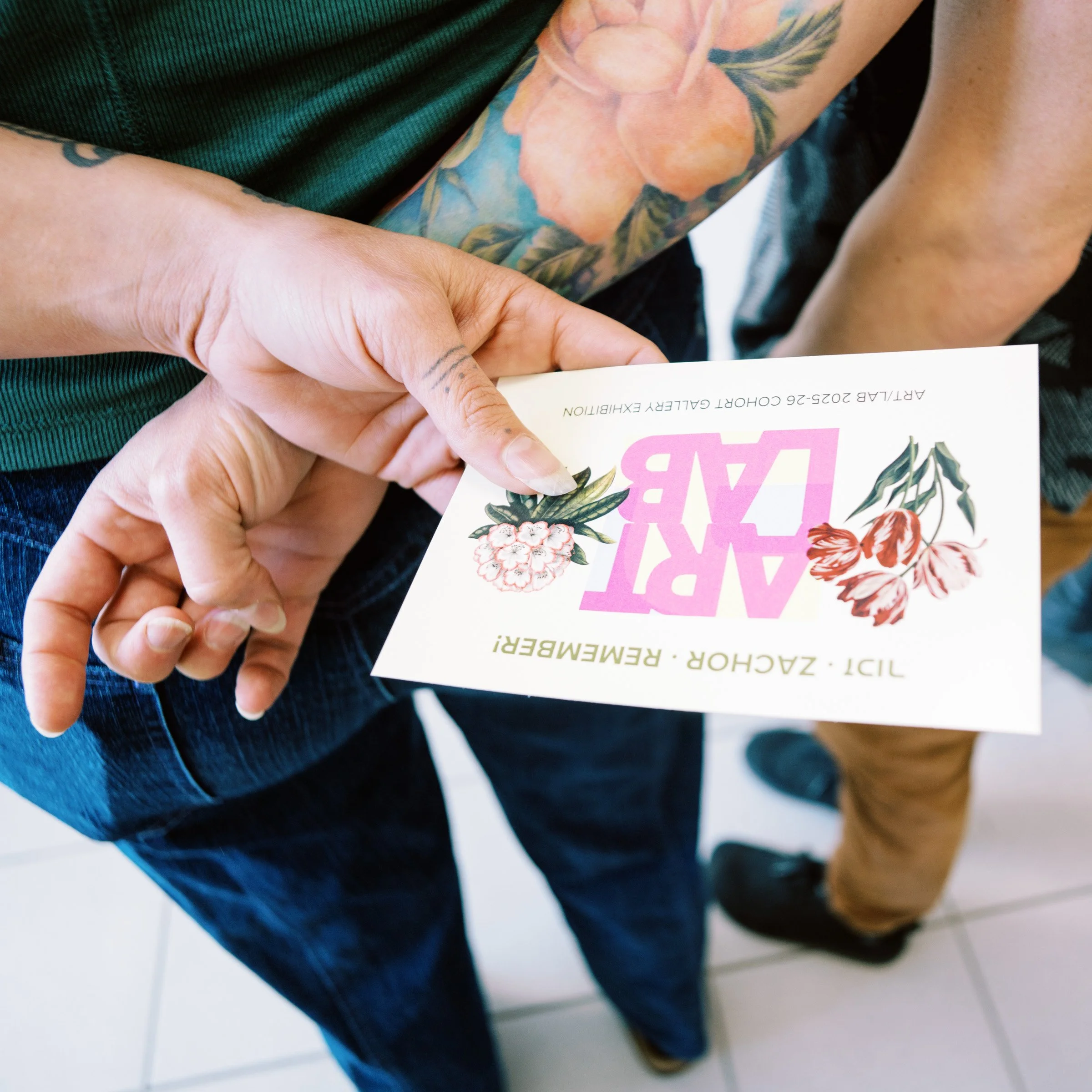
New works by the 2025-2026 Art/Lab Fellowship Cohort: Rachel Attias, Rachael Baskind, Zalmy Berkowitz, Brenda Bingham, Stashia Cabral, Andrew Cohen, Julie Hammond, Stephen Lorber, and David Rosman.
In the gallery June 6th - July 26th, 2026.
The Hebrew word for remember | Zachor | זכור, obligates the act of remembering and plays a central role in Jewish ritual practice, text and theology. Memory, for the Jewish people is not only recollection but a fundamental aspect of identity, community, and spiritual practice, acting as a living link between past, present, and future. The individual and the collective are bound together in the commandment to remember. Through the course of the 2025-26 Fellowship Cohort we have explored memory / זכרון and its role in shaping us as Jews in both the collective and the particular.
Gallery EVENTS (PAST)
Personal Portable Altars with Stashia Cabral
Sun, Jun 14, 1pm - 3pm PDT
Join Stashia Cabral in crafting, filling and decorating a small, personal altar. This altar can honor a memory, celebrate your family, facilitate your drams or be for any other purpose that you can imagine. Some supplies, including boxes and decorating supplies will be provided. Please bring your imagination and any other small items you are considering including, these may include photographs, photocopies, letters, buttons, jewelry or any other personal ephemera.
Sewing Session for Grievers with Julie Hammond
Sun, Jul 12, 2pm - 4pm PDT
Join Julie Hammond for a collaborative sewing circle for people who have lost loved ones. During each session, attendees will be invited to sew the name their loved one on a single, large piece of fabric. We will sit, sew, and share stories together. No sewing experience required, all materials provided.
Please note: The sewing will involve white thread on white fabric. Bring your reading glasses if you need them!
-
Artist Statement:
When I set out to write about memory, what came to me were vast spans of forgetting, broken up at irregular intervals by starkly recalled moments, like occasional lanterns along a dark passage. Early trauma has erased much of my individual memory. Collectively, my family’s memory is patchy, too. Like many descendants of diaspora, we have lost things to movement, displacement, violence, and time. I have often felt like an amnesiac, and have struggled to engage artistically with both my Jewish and Puerto Rican identities because I know so little about the individuals I came from, their decisions, their struggles, joys, stories, and traditions. The Little Books of Memory & Forgetting attempt to center forgetting as the story itself, or an essential part of it. This series of short essays explores forgetting as its own landscape worthy of discussion, while celebrating what memory has endured, warped or otherwise. I offer them to other diasporic people, and all amnesiacs - anyone who has been shaped by loss..Artist Bio:
Rachel Attias is a writer, educator, and editor based in Portland, OR. Her writing has appeared in n+1, Porter House Review, X-R-A-Y and more, and has been nominated for a Pushcart Prize, Best of the Net, and the Best Small Fictions anthology. She holds an MFA from Oregon State University, and teaches writing at Portland Community College and around the Pacific Northwest. She is at work on her first novel. -
Artist Statement:
In the last two years, an inordinate number of things broke. Things shattered: utilitarian objects and heirlooms that slipped from hands and shelves; words and their meanings; hearts; relationships; systems; and institutional beliefs.
My poems, prose, and mixed media are the re-collection of pieces, gathered from dispersed corners of the earth and memory. Concepts and items are relocated and joined. Nothing is the same. Some things are stronger than before, and some are still finding their way back.
This collection is offered in prayer for healing for the millions of unjustly separated families: indigenous families, immigrant and refugee families, and those fractured by the domestic legal system. Many children and parents have died without justice; many have been seeking it for decades. May we cease the epidemic of “othering,” and may all be healed and find wholeness.
"In a free society, some are guilty, but all are responsible."
Rabbi Abraham Joshua HeschelArtist Bio:
Rachael Baskind is a writer, educator, mother, counselor, and social justice advocate based in Portland, Oregon. Her poetry, prose, and mixed media explore memory, identity, healing, and faith. As a ritualist, she investigates the ways embodied writing can restore connection across personal and collective experience. Rachael earned her MFA from the Iowa Writers’ Workshop. -
Artist Statement:
I don’t experience memory in a typical way. My past doesn’t return to me as something vivid or lived, rather as a set of facts as though reading someone else’s journal. These images are about coming to terms with the black hole where my memory should be. They explore what it means for me to document my life when the documentation doesn’t trigger any memory. Over many years of attempting to capture the magic and joy of my family’s life, to preserve what will inevitably be lost, I now pause to notice, to experience the beauty and life in the here and now, accepting those moments as good enough. Maybe more than good enough; an active letting go of the need to remember.Artist Bio:
Zalmy Berkowitz is a documentary photographer, focusing on the heartbreakingly magical, beautifully chaotic, and painfully fleeting, world of childhood. He lives in Portland with his wife, seven-ish unschooled kids, and one ghost. -
Artist Statement:
L’dor V’dor (from generation to generation) explores memory, adornment, and why we hold on to what we hold on to. This patchwork quilt is composed of garments belonging to Carol Ann Lee, my 93-year-old maternal grandmother and last living grandparent. For over two decades, she has pinned meticulous notes to her clothing documenting when and where each item was worn. Even ordinary everyday garments carried her notes, treated with the same care as special occasion pieces-an insistence on remembering that I’ve always found both compulsive and glamorous. When she decided to donate these clothes, I asked to keep them instead. I was drawn to quilting as a way of gathering these pieces into a single object in order to preserve not only the garments themselves, but her way of remembering.Artist Bio:
Brenda Bingham is photographer, archivist, project coordinator, book designer, and fiber artist. Originally from New Jersey, she is currently working for artists and arts nonprofits in Portland,OR. Brenda works in embroidery, beading, and with natural materials to create amulets and adornment for body and home. -
Artist Statement:
I submit to you fragments of letters. These are love letters my Grandmother received from my Grandfather. This history, memories which were never shared, are such a fascinating insight into this chapter of their story. They grew up on the same street in Nuremberg, shared a birthday, were childhood playmates, and were later separated in 1933 when thirteen year old Hans (John) was sent to America. They reunited eight years later in New York, fell in love and began a very complicated marriage which had an ugly ending. Though they didn’t speak for 50 years, my Grandmother saved these letters through two more marriages –artifacts from my family, saved with love, hidden away, sometimes cruel, often accompanying expectations, judgments, hopes –collected, reimagined and arranged.Artist Bio:
Stashia Cabral is a visual and performance artist from Portland, Oregon. She works in movement and traditional media such as sculpture, and painting, and has a passion for ready made and assemblages. Archival artworks, mined from her family’s archives and alternative photography processes, are constant interests of hers. Stashia’s performance pieces range from traditional belly dance, to butoh and burlesque and feature beautifully handmade costumes and props. Quirks and oddities are her happy place. Stashia has shown work at galleries and cafes locally, and has performed at cafes, theaters, and big stages, including the Northwest World Reggae Festival.Stashia received her MFA from Pacific Northwest College of Art.
-
Artist Statement:
I write essays that document and explore Jewish family and cultural life through narratives and observations about people I love. Aging parents and grandparents. Emptying nests. Vanishing memories—these are my central concerns, all set against the backdrop of Jews in the Diaspora, particularly those connected to Israel, in a post-October 7th world.Artist Bio:
Andrew Cohen is a Portland-based writer and teacher. His essays have appeared as part of the Jewish Book Council’s Witnessing series, and in journals such as Alaska Quarterly Review,Judith, Zyzzyva, ofthebook, Gettysburg Review, Boulevard, Michigan Quarterly Review, and The Missouri Review, where he received the Editor’s Prize. For the past twenty-three years Andrew has taught writing, literature and humanities at Portland Community College, where he founded and still chairs the PCC Humanities and Arts Initiative to enhance opportunities for students to engage with the humanities and arts both inside and outside the classroom, on campus and beyond. -
Artist Statement:
May Day, Mayday, Mayday is a constellation of projects centered on grief, surrender, and the labor of carrying on. In the nine months between September 2024 and May 2025 I lost three members of my family: my father, Kenric William Hammond (1947-2024), my grandmother, Sidonia Singer (1921-2024), and my nephew, Frederic Han-Eum Hammond (2009-2025). Over the last year, I’ve sat with the relentless, compounding grief of these multi-generational losses. I remember, and I am unable to forget. These projects – a walk and its documentation, an installation that invites release, and a series of gatherings to share the names and stories of people we have lost – are tied together with the multiple meanings of avodah: labor, service, and prayer. Grief is work, and it takes work. It is of this world, and far beyond it. It is deeply personal, and deeply communal.No matter how much you water the grass, it will not grow.
Artist Bio:
Julie Hammond is an artist working across theatre, installation, and public practice. Recent work includes the 9 hour performance Hindsight 2020 (presented by Risk/Reward), a sign-based community history of Peninsula Park, and soundwalks created for Third Angle New Music and New Works Calgary. Her practice is driven by questions, deep research, and collaboration, and aims to shift how audiences/viewers/participants consider place and time. She holds an MFA from Simon Fraser University (Vancouver, BC). -
Artist Statement:
Susan is a physical response to the tension between wanting to share the memory of a loved one who is no longer here and the untranslatable nature of memory itself. Grief drives us toward the impossible task of preserving every detail of someone’s life, even though so much of it can never be fully passed on or properly translated. What I can offer instead is the feeling of a loved one’s presence rather than the precise facts of their life.This piece invites you to be held by the memory of the person I love and to experience that in communion with those you love. How you feel while lying there with your friends might echo the comfort my mom gave me in life. In that exchange, her memory is no longer mine alone; you become a carrier of it in a way that’s uniquely yours.
This work developed from a recording of my mom, Susan’s, last words. I played the audio through a Chladni plate, capturing the unique pattern formed by her voice. I then transformed that pattern into a three-dimensional drawing and expanded a section of it to human scale. The final piece is a six-foot by six-foot upholstered sound wave—an object meant for sitting, talking, and being held.
Artist Bio:
Stephen Lorber is an interdisciplinary artist whose current practice centers on creating tactile, handcrafted objects that reflect broader themes drawn from his life. Working entirely from scratch, he bends, welds, grinds, sews, and wires each piece by hand. His roots in activist art inform a continual inquiry into how the spaces we inhabit and the objects we live with shape—and are shaped by—our values and attention. -
Artist Statement:
In the 19th century Pale of Settlement, what a klezmer band played at a wedding depended upon how much they were paid. For wealthy, important, community leaders, the kapelmiester (band leader) would fill the evening with virtuosic improvisations and original compositions. The processional and dance numbers would be performed by his top musicians. The music would, generally, be upbeat and include popular non-jewish songs of the day. However, for the poor person unable to pay the band, the kapelmeister would send out a fid’l pakl tukhas kapalye (violin, drum, butt band). Their music would be more old fashioned, and depressing, and performed by apprentice level musicians. Further, each individual dance number would have to be paid for by the wedding guests. Thus every tune would end with the same three emphatic notes (octave! fith! root!) or as the klezmorim called it in their own dialect yold, gilb, gelt! (pay up chump!).The album I produced during my time in Art/Lab is fidl paykl tokhes music. It’s music that did not flourish in America, it's a side of the Klezmer repertoire that very few people have heard.
Artist Bio:
David Rosman is a multi-instrumentalist and recording artist from metro Detroit, Michigan. He has worked in a wide range of musical genres from classical and jazz to electronic and metal, to traditional Jewish folk music. In addition to teaching, he performs with a klezmer ensemble and composes music for film and advertising. David holds an undergraduate degree from the University of Oregon where he studied music ethnography and music technology. He currently lives and works in Portland, Oregon.




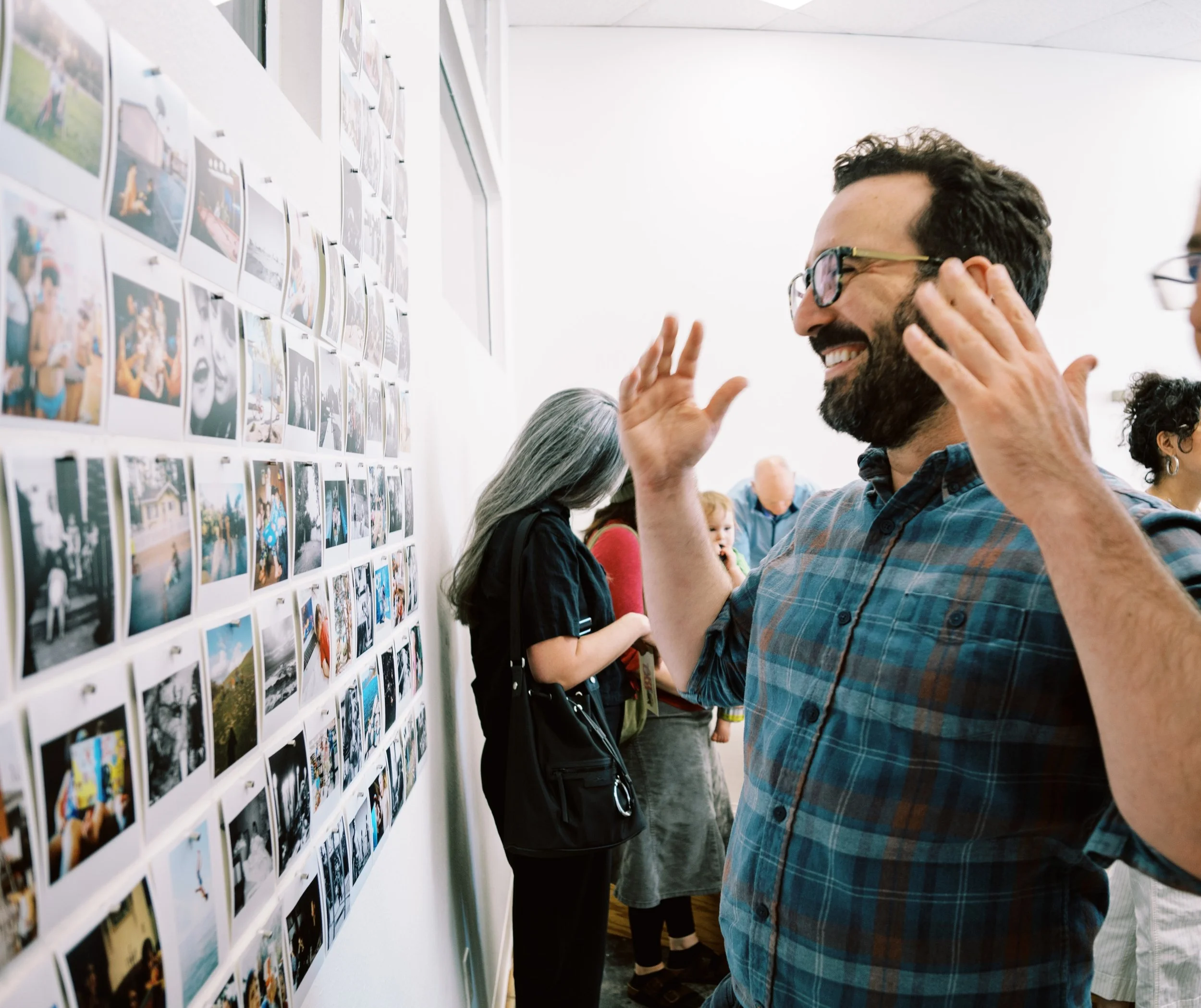
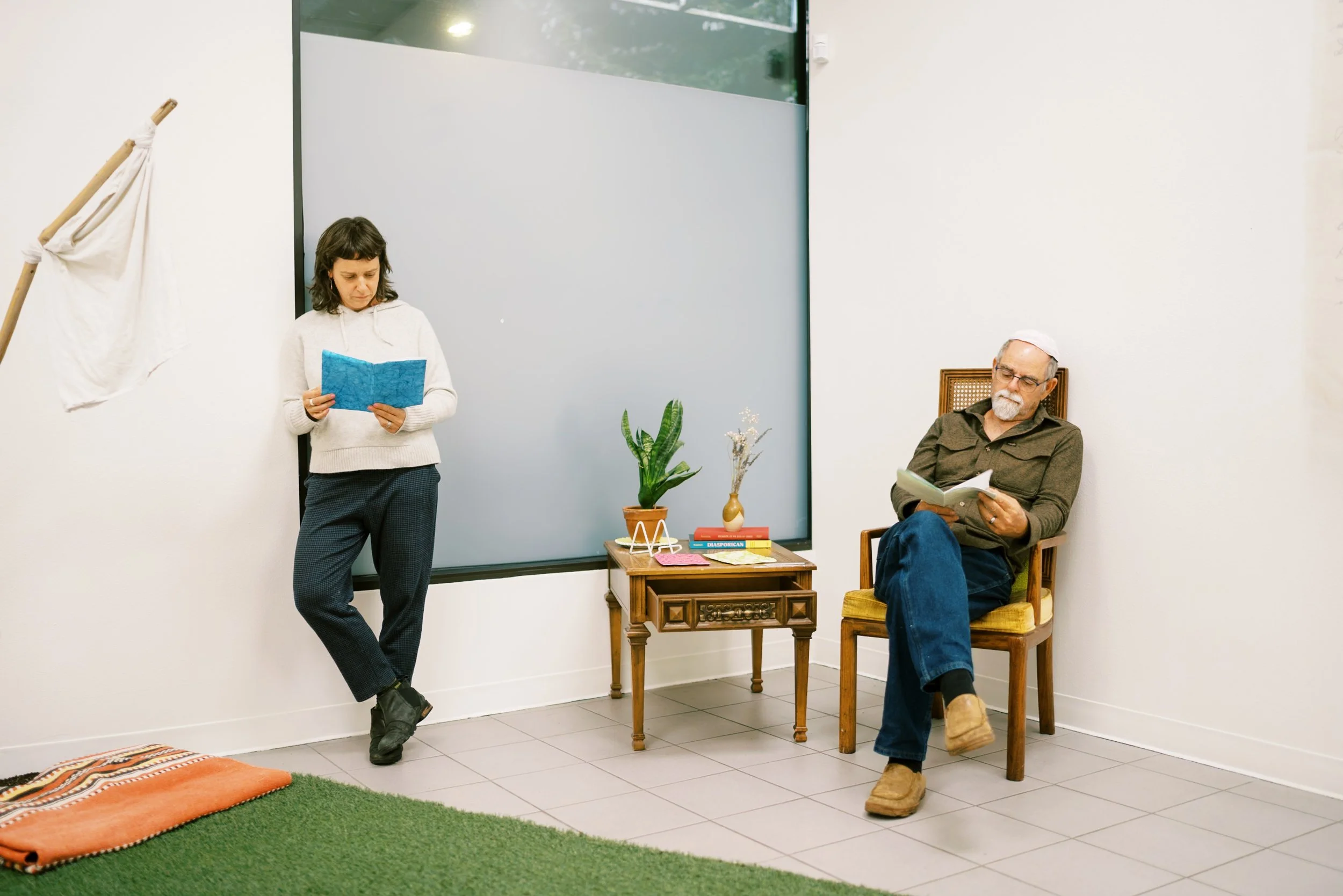
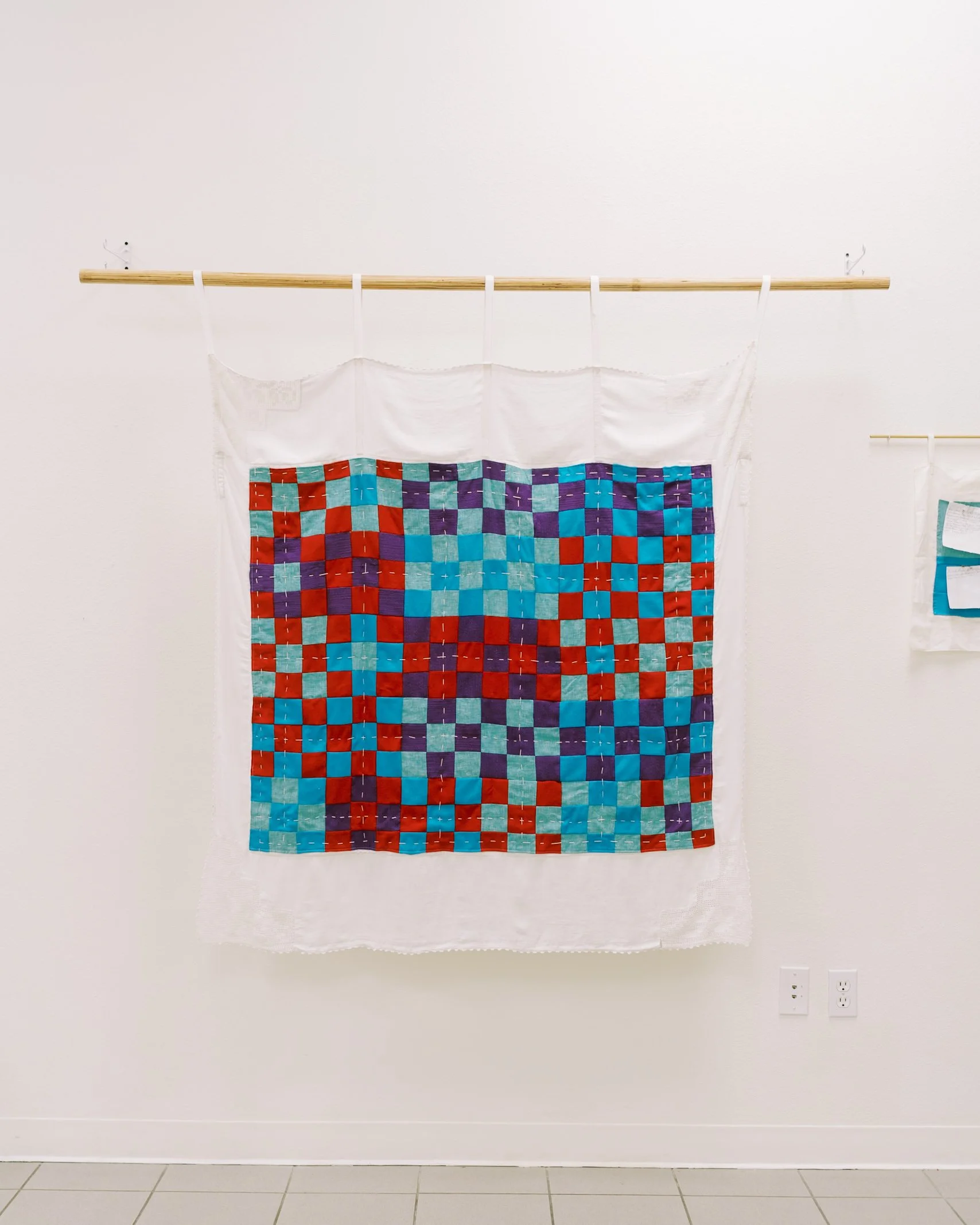
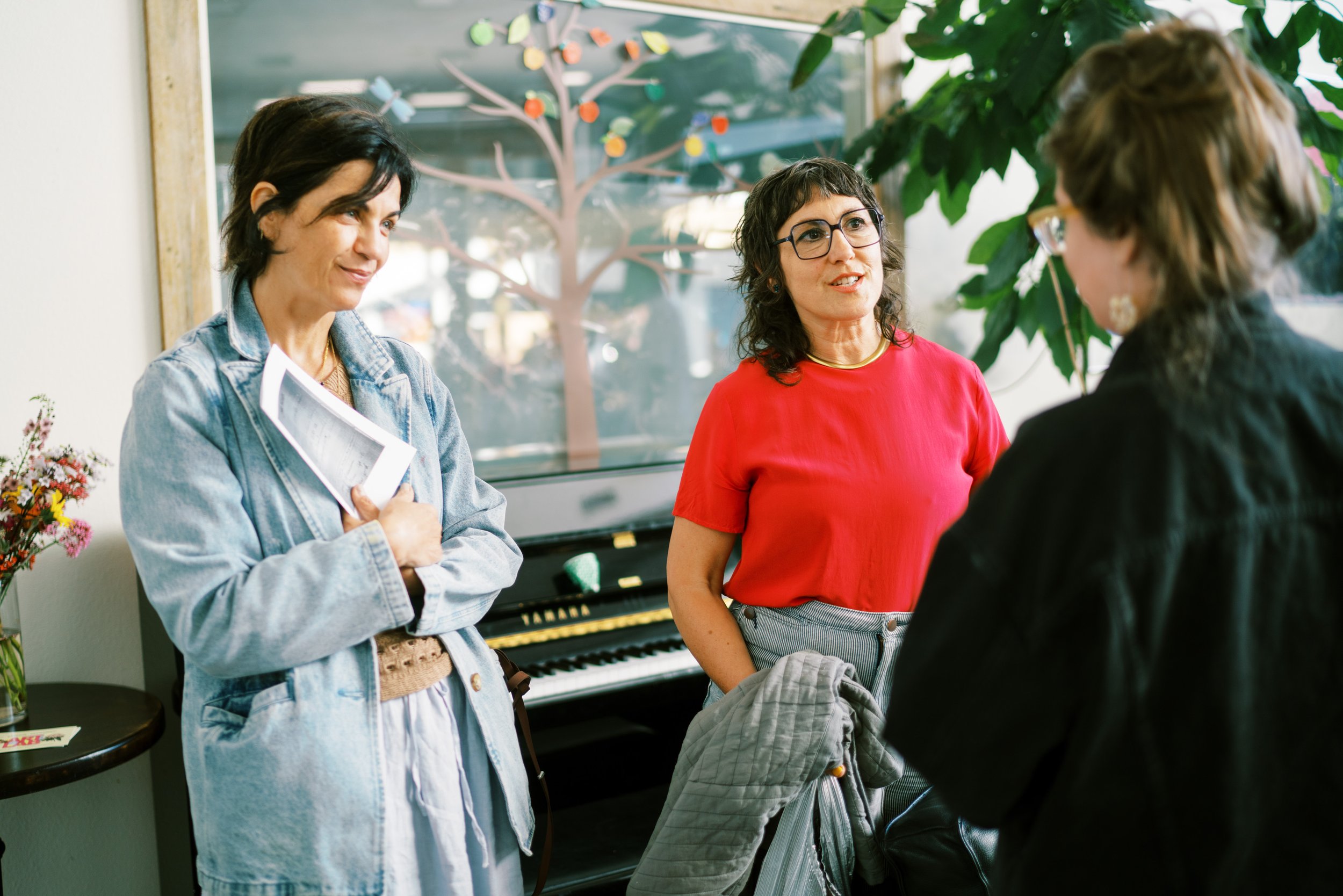
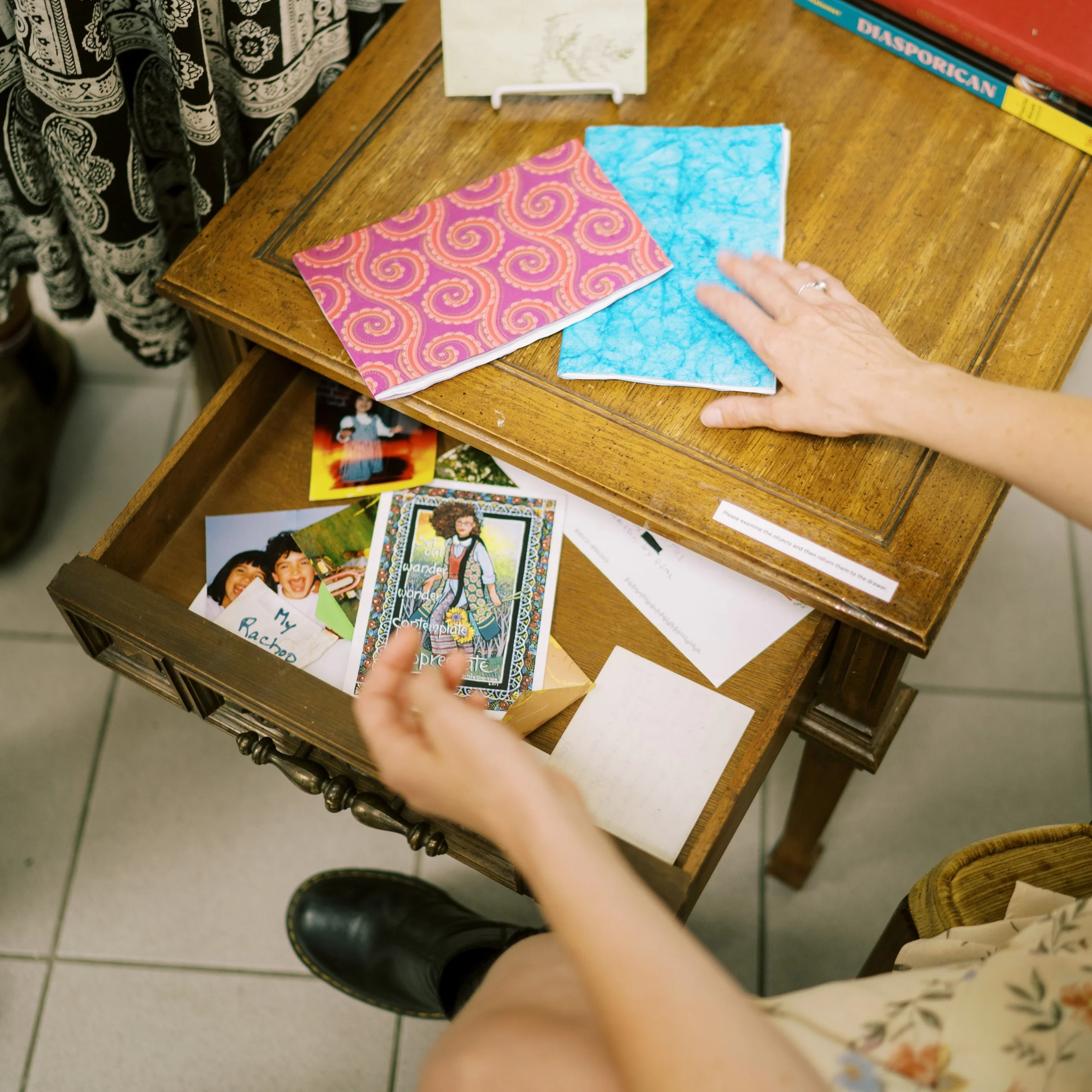
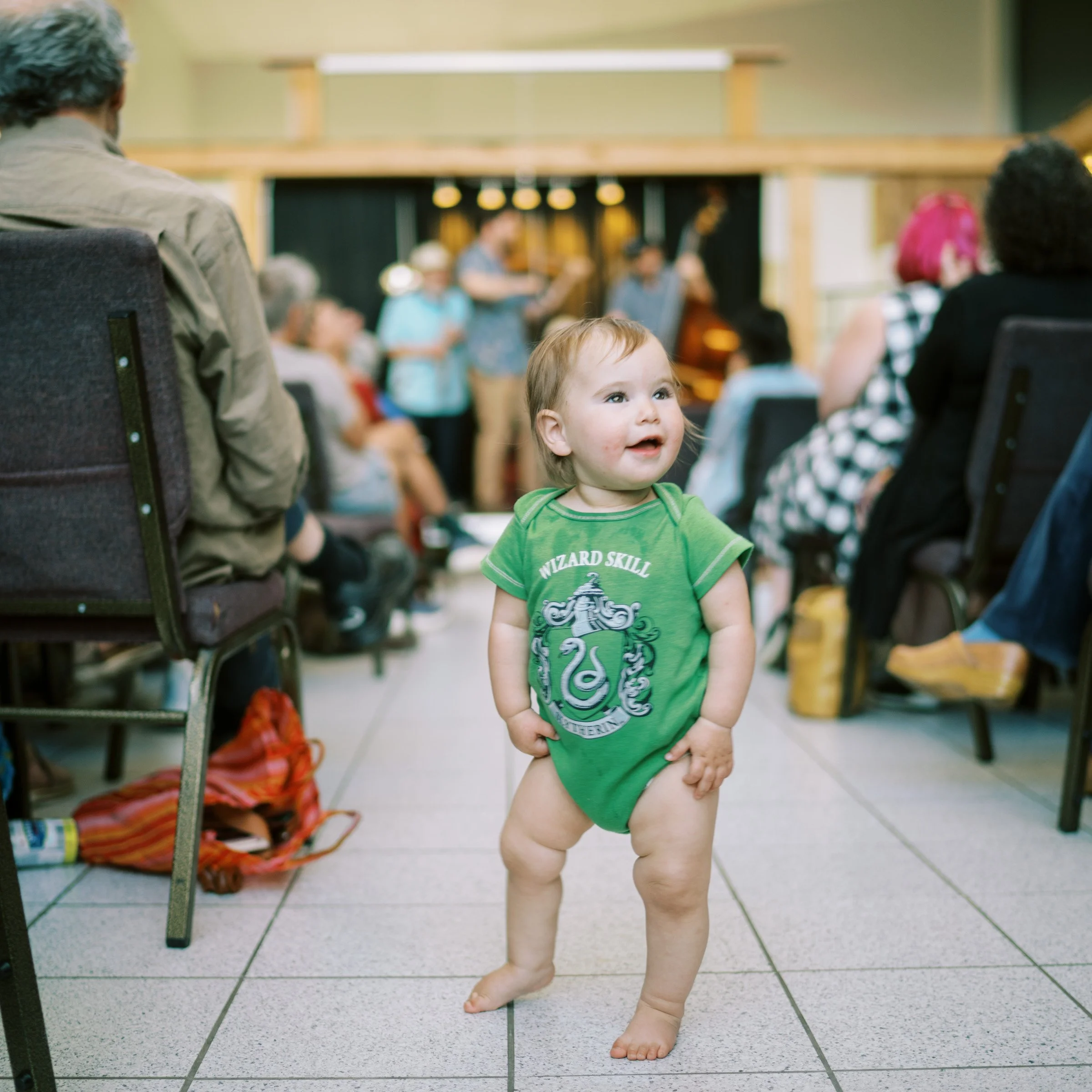
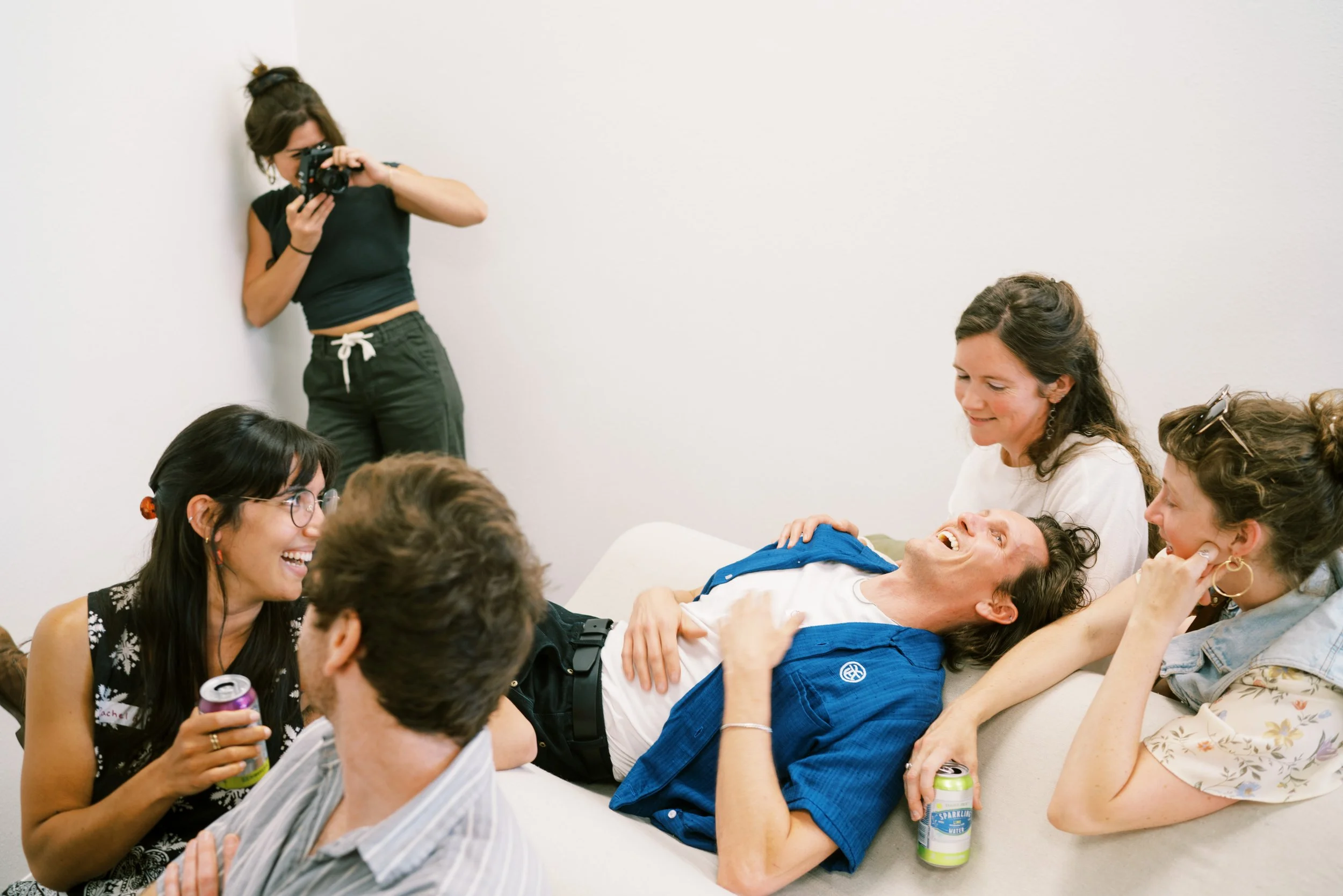
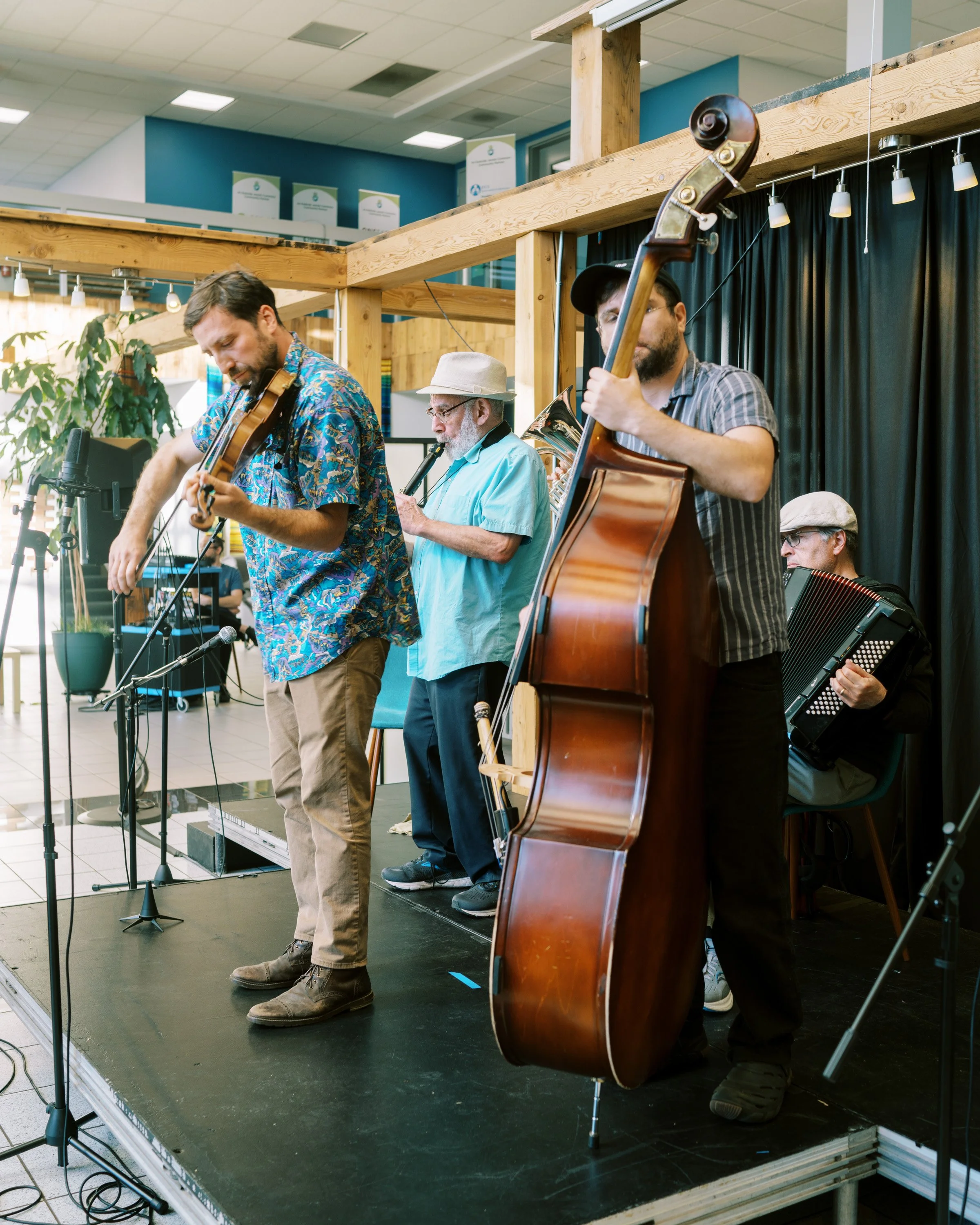
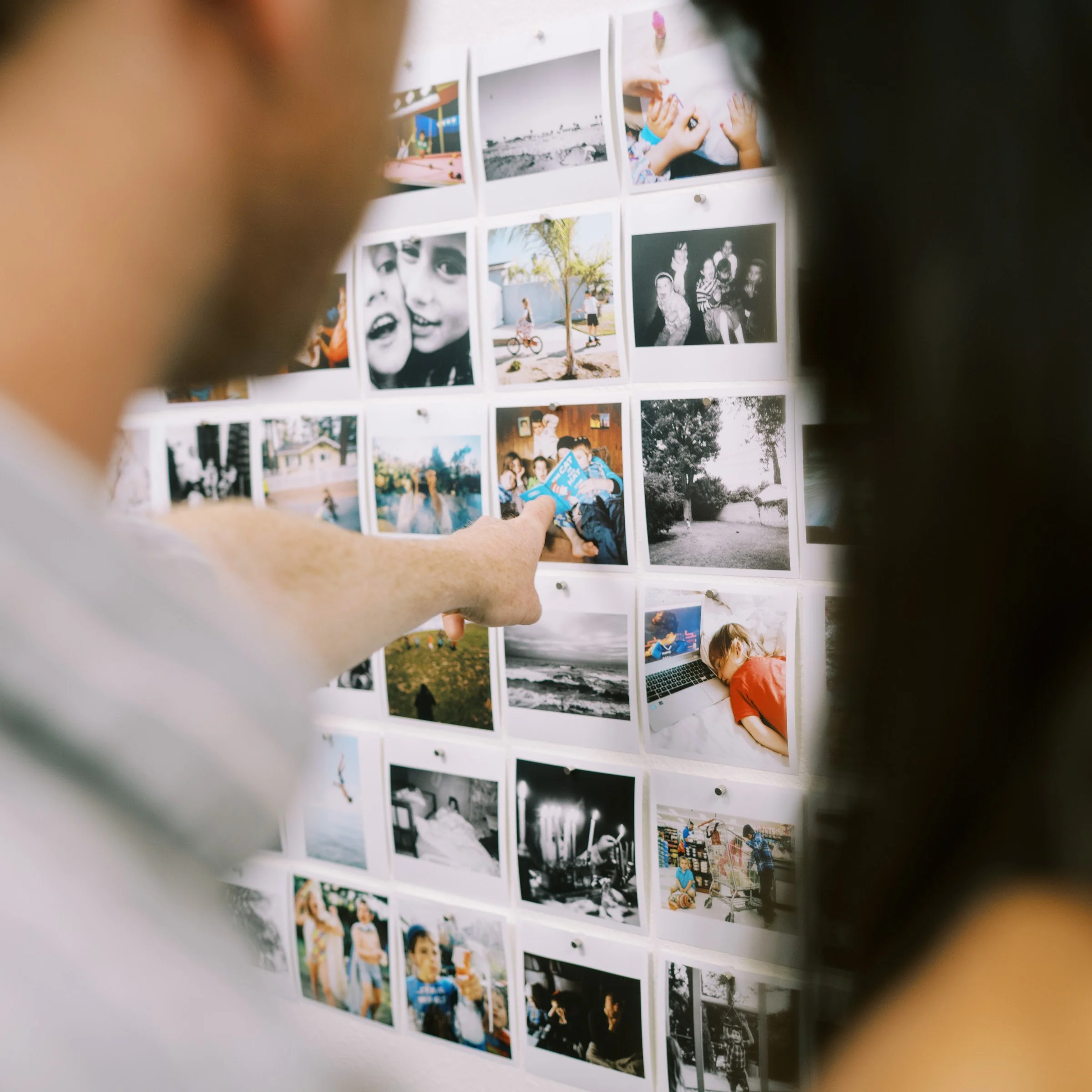
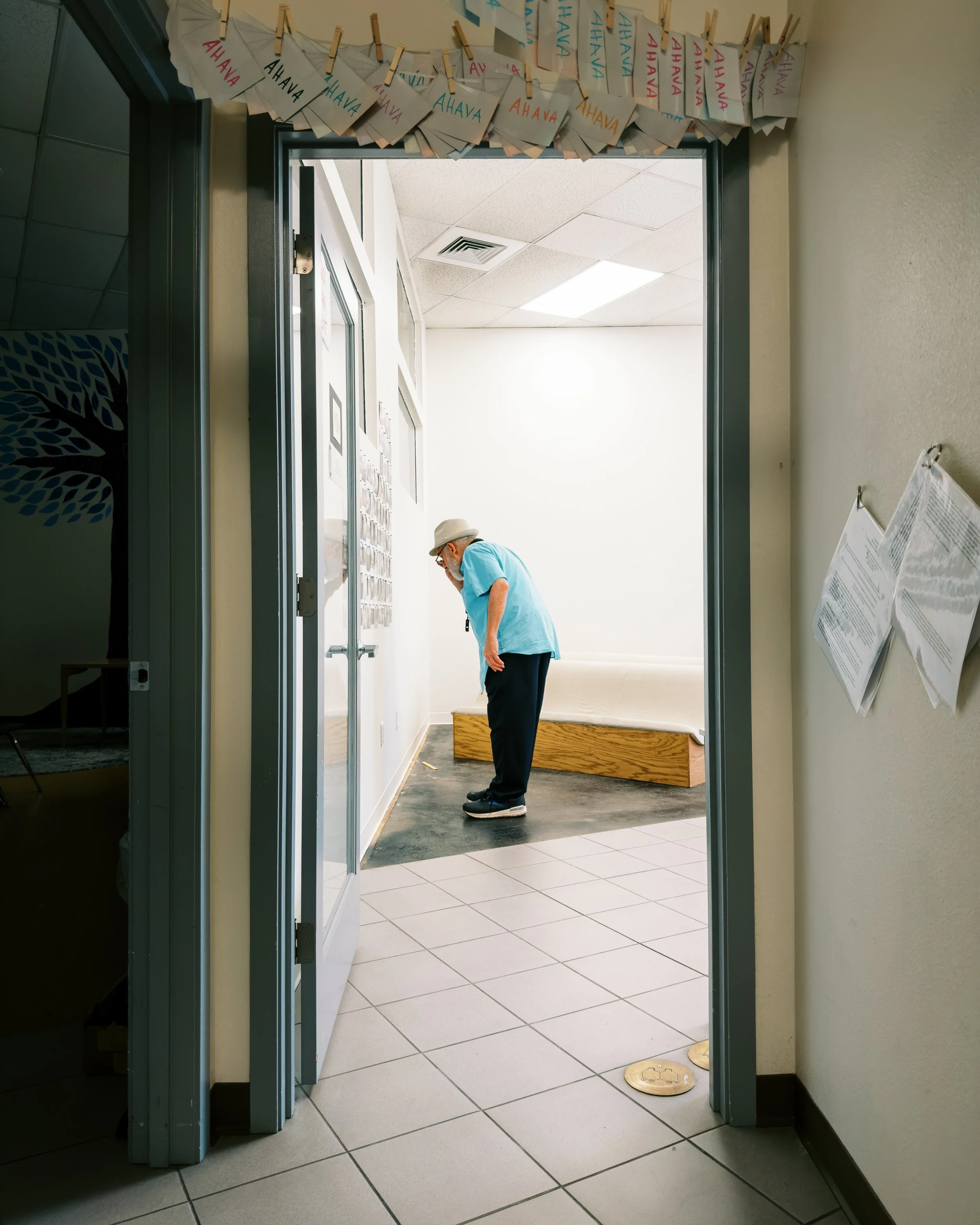
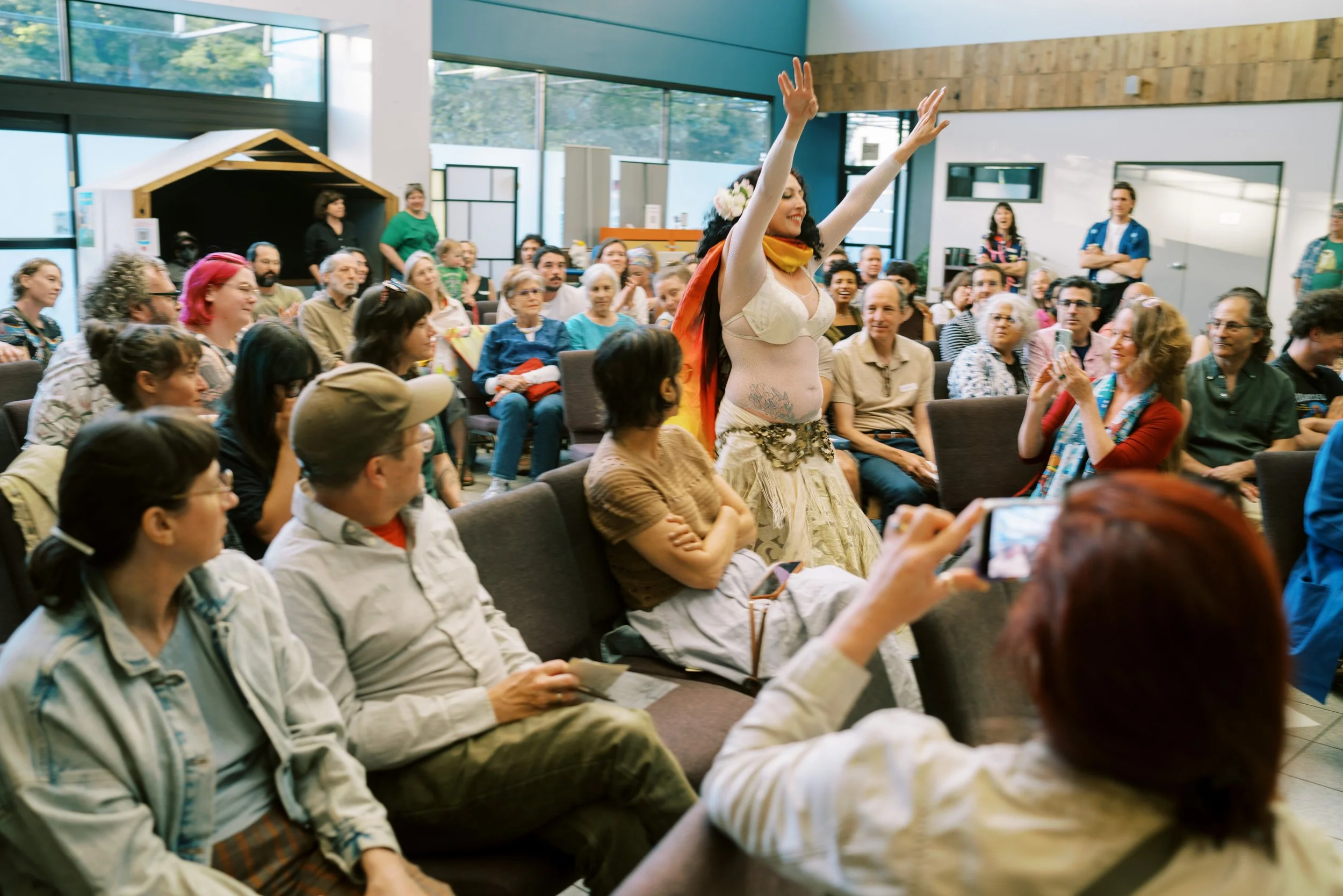
2023 Art/Lab exhibition Install
(before acquiring our current space)
Video by Michael Turner